Thinking about leaving Chicago for Algonquin? The biggest surprise for many buyers is that your home search does not just move northwest, it changes shape completely. If you are expecting the same checklist with a different ZIP code, you may miss what matters most in this market. This guide will help you reset your search around space, commute patterns, home types, and daily convenience so you can shop smarter in Algonquin. Let’s dive in.
Your search gets more space-focused
One of the first shifts you will notice is density. According to U.S. Census QuickFacts for Algonquin, Algonquin has 30,539 residents and a population density of 2,414.2 people per square mile. Chicago is much denser at 12,059.8 people per square mile.
That difference changes how you evaluate a home. In Chicago, you may have focused on the unit itself, building features, and what is just outside your front door. In Algonquin, buyers often start thinking more about lot size, yard use, driveway space, garage capacity, and how the property fits into the surrounding area.
Algonquin is also a heavily owner-occupied market. The Census reports an 88.2% owner-occupied housing rate in Algonquin, compared with 46.0% in Chicago. That often means you are shopping in a market where detached homes and long-term ownership play a much bigger role in the overall housing mix.
Price may not drop the way you expect
A common assumption is that moving from Chicago to Algonquin automatically means buying for less. The current market snapshot in the research shows that is not always true. Algonquin’s median listing price is about $399,900 with roughly 25 days on market, while Chicago’s median listing price is about $350,000 with roughly 37 days on market.
That does not mean Algonquin is more expensive in every case. It means the comparison is usually about different value, not just lower cost. You may be paying for more square footage, a larger lot, a garage, or a different day-to-day living setup.
The Census also shows the median owner-occupied home value at $351,000 in Algonquin versus $334,100 in Chicago. If you are moving out to the suburbs, it helps to think beyond sticker price and focus on what features matter most to your lifestyle and budget.
Home types look different in Algonquin
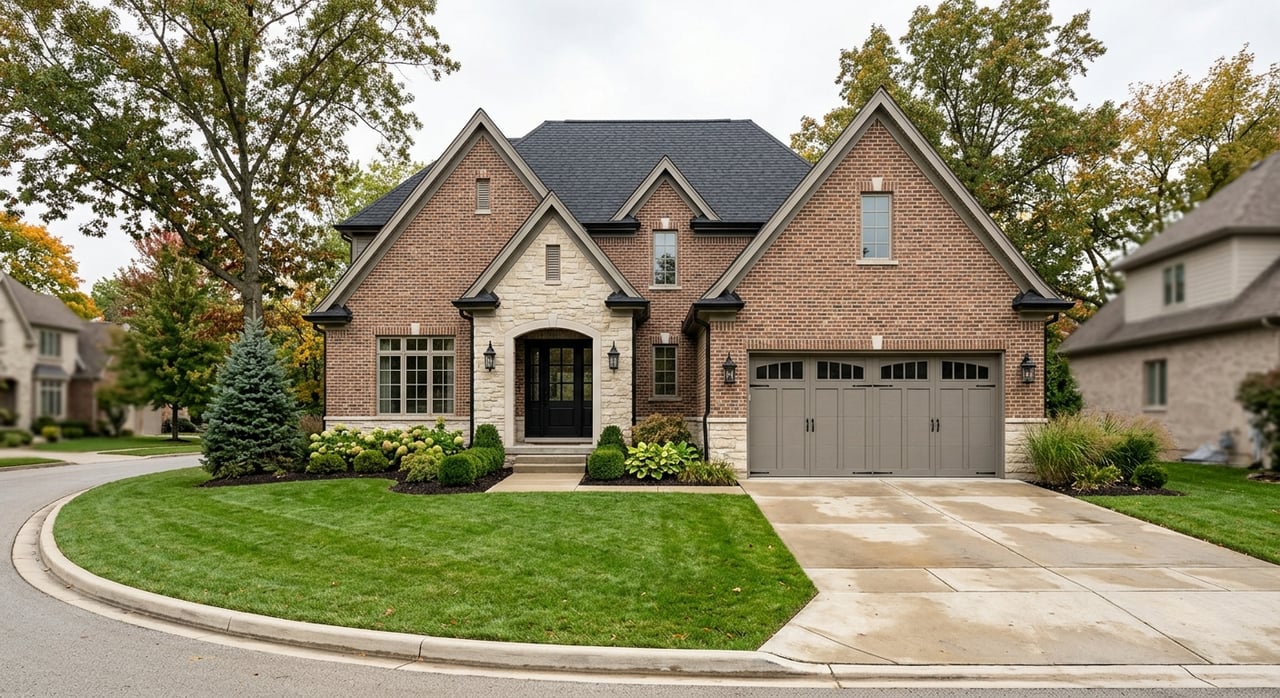
The housing mix in Algonquin is one of the clearest reasons your search criteria need to change. Village planning materials show that 72.6% of occupied homes are single-family detached, 18% are single-family attached, and 9.4% are multifamily in Algonquin.
For many Chicago buyers, that means your options will lean much more heavily toward detached homes than condos or larger multifamily buildings. If you are used to comparing elevator buildings, HOA amenities, or assigned parking, your new checklist may need to prioritize things like:
- Detached versus attached home style
- Yard size and outdoor use
- Basement or storage space
- Number of garage spaces
- Driveway layout
- Interior square footage versus lot size
This is one reason a suburban search can feel unfamiliar at first. You are not just switching locations. You are often comparing a very different kind of property.
Lot size matters more than before
In Algonquin, lot size is not a small detail. It is often a major part of the buying decision. The village zoning code includes several single-family districts with minimum lot sizes ranging from 10,000 to 18,000 square feet in R-1, R-1A, and R-1E districts, while R-2 allows a smaller 8,700-square-foot minimum, based on the village’s planning and zoning materials.
That matters because suburban buyers often use outdoor space differently. You may want room for pets, gardening, gatherings, play space, or simply more separation from neighboring homes. Instead of asking only how many bedrooms you need, you may also want to ask how you plan to use the lot itself.
It is also smart to think through maintenance. More land can be a major plus, but it can also mean more mowing, more snow removal, and more exterior upkeep. A good search starts with an honest look at how much space you want and how much you want to manage.
Old Town and subdivisions offer different experiences
Not every part of Algonquin lives the same way. The village describes the Old Town district as a more compact, mixed-use area where residential uses can sit above commercial space, with a design goal focused on preserving a village-scale pedestrian environment. That creates a different feel from a typical subdivision layout.
If you want a setting that feels a little more connected to shops, eateries, and a traditional downtown pattern, Old Town may be worth a closer look. If you prefer a more conventional suburban setup, newer or more typical subdivision areas may fit better.
This is a helpful shift for Chicago buyers. Instead of thinking only in terms of neighborhood name recognition, you may want to sort your search by setting type. Do you want a more compact, mixed-use environment or a more spread-out residential layout with larger lots and curving streets?
Commute planning becomes more car-first
Your commute may be similar in length on paper, but different in practice. Census data in the research report show average commute times of 30.6 minutes in Algonquin and 33.1 minutes in Chicago. The real change is how you get where you need to go.
Algonquin is much more car-first and park-and-ride oriented. The village notes access to I-90 via IL Route 31 and Randall Road, and it identifies nearby Metra stations on the Union Pacific Northwest and Milwaukee District West lines, including Crystal Lake, Pingree Road, Cary, Fox River Grove, Barrington, Big Timber Road, and Elgin in its commuter information FAQ.
If you are coming from Chicago, this usually means you should stop searching around CTA convenience and start searching around:
- Drive time to work or frequent destinations
- Access to I-90
- Proximity to Randall Road
- Distance to a preferred Metra station
- Availability of Pace service
The village also notes Pace Route 550 along Randall Road and places O’Hare about 30 minutes away. That can be a meaningful detail if airport access is part of your routine.
Daily convenience shifts too
In Chicago, convenience can often mean dense retail, street parking, and a long list of nearby businesses within a short walk. In Algonquin, convenience tends to work differently. Your day-to-day experience may center more on corridor access, parking ease, parks, and how close you are to your regular shopping and recreation spots.
The village highlights a broad park system that includes Riverfront Park, Towne Park, Presidential Park, Algonquin Lakes Park, and Willoughby Farms Park, along with trail and pavilion facilities in its parks and amenities information. For many buyers, park access becomes a much bigger quality-of-life factor than it was in the city.
Shopping and dining patterns change too. The village describes Randall Road as a key commercial corridor and identifies Algonquin Commons as a major retail, entertainment, and dining destination. That means your ideal location may depend less on corner-store density and more on how quickly you can reach the places you use most.
Remote work can be easier to factor in
If you work from home full time or part time, Algonquin may open up new options for how you use your space. The Census reports that 95.0% of households in Algonquin have broadband subscriptions. That is a useful baseline if you need reliable connectivity for video calls, home office use, or hybrid work routines.
This can change what matters in your home search. A spare bedroom, finished basement, loft, or flex room may become more important than being close to a train stop every day. If remote work is part of your life, make sure your search reflects how you actually use your home during the week, not just on weekends.
How to reset your Algonquin checklist
Before you start touring homes, it helps to rebuild your criteria from the ground up. A Chicago checklist and an Algonquin checklist may overlap in some ways, but they should not be identical.
Here are the search filters that usually matter most when moving from Chicago to Algonquin:
- Home type: detached, attached, or multifamily
- Lot size and yard use
- Garage, driveway, and storage space
- Commute route and drive time
- Access to Metra stations or Pace service
- Proximity to I-90 or Randall Road
- Preference for Old Town or a subdivision setting
- Space for remote work or flexible living
When you organize your search this way, it becomes easier to compare homes fairly. You are no longer asking whether Algonquin feels like Chicago. You are asking whether a specific home supports the life you want in Algonquin.
Why local guidance matters
A move from Chicago to Algonquin often looks simple on a map, but the buying process can feel very different once you start comparing actual homes. Property types, lot sizes, transportation habits, and daily routines all shift at the same time. That is why it helps to work with a team that understands both the suburban market and the practical questions buyers ask during a relocation.
At Jeffrey Padesky Real Estate, you can get clear, data-informed guidance as you narrow down the right home, location, and search strategy for your move. If you are planning a move from Chicago to Algonquin, reaching out early can help you focus on the criteria that matter most and avoid wasted time on homes that do not truly fit.
FAQs
How does a Chicago home search change when you move to Algonquin?
- Your search usually shifts away from building amenities and dense walkability and toward home type, lot size, yard space, garage capacity, commute routes, and access to parks and shopping corridors.
Is Algonquin cheaper than Chicago for homebuyers?
- Not always. The research report shows Algonquin’s median listing price is about $399,900 compared with about $350,000 in Chicago, so the move is often more about getting different space and housing options than simply paying less.
What home types are most common in Algonquin?
- Algonquin is primarily a detached-home market, with village planning materials showing 72.6% single-family detached homes, 18% single-family attached homes, and 9.4% multifamily homes.
What should Chicago buyers prioritize for an Algonquin commute?
- Most buyers should focus on drive time, access to I-90, proximity to Randall Road, nearby Metra station options, and whether Pace service fits their routine.
What parts of daily life feel different in Algonquin compared with Chicago?
- Daily life often becomes more centered on park access, retail corridors, parking convenience, and subdivision or Old Town setting preferences rather than CTA access and dense block-by-block retail.
Is Algonquin a good fit for remote work buyers?
- It can be a practical option for remote or hybrid work, especially since the Census reports 95.0% of households have broadband subscriptions and many homes may offer more flexible interior space for an office setup.