If you have started looking at homes in Barrington, you have probably noticed something quickly: this is not a one-note market. One street may have historic homes near downtown, while another offers larger lots, private amenities, or newer low-maintenance options. That can make your search feel exciting, but it can also make it harder to know which area truly fits your budget, routine, and goals. In this guide, you will get a clear breakdown of Barrington’s main residential pockets, the home styles you are most likely to see, and how to match each area to the lifestyle you want. Let’s dive in.
Why Barrington Feels So Varied
Barrington is a historic suburb about 40 miles northwest of Chicago, and the village serves as the hub of a broader Barrington area that includes seven independent villages and more than 47,000 residents. The Metra station sits in the village center, which helps shape how many buyers think about convenience, commute, and in-town living.
It is also important to understand that Barrington is a premium housing market compared with much of Illinois. Research sources in the report place Barrington well above the statewide median price, even though the exact figures vary by platform because they track listings, estimated values, and closed sales differently. The bigger takeaway is simple: Barrington is best understood as a market of submarkets, not one single price point.
Redfin currently describes Barrington as somewhat competitive, with homes often selling in about 50 to 56 days and some multiple-offer activity. For you as a buyer or seller, that means neighborhood choice, pricing strategy, and property condition can all matter a lot.
Village Center Living
If you want walkability and everyday convenience, the Village Center is usually the first place to look. Barrington’s 2021 Comprehensive Plan describes this core area as a mix of retail, service, office, artisan, institutional, and residential uses, all within walking distance of one another and close to the Metra station.
This part of Barrington makes sense if you value access over lot size. The plan also supports rowhomes and condominiums near the station, so you will find options that appeal to commuters, downsizers, and buyers who want less exterior upkeep.
One thing to know is that pricing in the Village Center can vary a lot. The research report notes recent listings ranging from under $400,000 to well above $1 million, with low monthly sales volume. In practical terms, that means you should evaluate each home on its own merits instead of assuming the whole area fits one price band.
Who Village Center Fits Best
The Village Center is often a strong fit if you want:
- Walkability to shops and services
- Easier access to the Metra station
- A smaller yard or lower-maintenance setup
- In-town character close to the heart of Barrington
Historic Overlay District
If architectural character matters to you, the Historic Overlay District deserves special attention. Barrington created this district in 2001 to preserve historic areas, and exterior changes typically require approval through the village’s review process.
That review process usually takes about 60 to 90 days, according to the village. For some buyers, that is a worthwhile trade because these homes offer distinct style and a strong sense of place. For others, the added rules may feel too limiting, especially if major exterior changes are part of the plan.
The village describes this district as one of the largest frame-home districts in Illinois, with styles that include Folk, Craftsman, Victorian, and other early American forms. Lake Street is often highlighted as a signature street, and West Lake Street is noted for strong examples of more ornate historic architecture.
What to Expect in Historic Homes
Homes in the historic district often appeal to buyers who appreciate details you do not always find in newer construction. Depending on the property, you may see:
- Original or style-consistent porches
- Decorative trim and varied rooflines
- Mature streetscapes near the village core
- Older floor plans with unique layouts and character
The tradeoff is that ownership can come with extra planning if you want to change the exterior. That is not a negative or a positive on its own. It just means the fit depends on how much you value preservation and architectural identity.
Established Subdivisions
If your version of Barrington looks more like curving streets, larger homes, and a traditional suburban setup, established subdivisions may be the best match. The village subdivision inventory includes names such as Fox Point, Jewel Park, Westwood, Chippendale, Wyngate, Hillcrest Acres, Barrington Meadows, Park Barrington, Barrington Point, and Tall Trees.
These neighborhoods are often where buyers look when they want more separation from the village core while still staying in Barrington. Compared with in-town pockets, the appeal here is usually less about walkability and more about layout, lot size, and neighborhood structure.
Fox Point is one of the most recognized examples. Its HOA says the community includes 411 homes built in the late 1960s and early 1970s, along with a private lake, pool, and tennis courts. The research report also cites a recent median sale price of $835,000, which places it firmly in the move-up range.
Jewel Park is another higher-end established subdivision. The report notes a recent neighborhood median sale price of $885,000, along with a 4-bedroom home on Elm Road that sold at that same figure.
What Established Subdivisions Offer
These areas often fit buyers who want:
- More traditional suburban neighborhood design
- Larger homes than many in-town options
- Community amenities in select neighborhoods
- Mature landscaping and established streetscapes
If you are comparing subdivisions, it helps to look beyond the neighborhood name. Build era, lot size, updates, and amenities can all affect value and daily living.
Larger-Lot and Estate-Style Areas
For some buyers, Barrington is all about space. If you want more land, more privacy, or room for hobbies, the larger-lot and estate-style pockets are often the clearest fit.
Steeplechase and Tall Trees are two examples highlighted in the research. A Steeplechase property cited in the report sits on 5.3 acres, and nearby values on the same page ranged from around $900,000 to $1.39 million. A Tall Trees listing emphasized a half-acre lot, mature trees, and updated landscaping.
These areas connect with a longer part of Barrington’s history. The village notes that the area developed in the early 1900s as a countryside retreat for wealthy Chicago businessmen, and that equestrian traditions and open space remain part of Barrington’s identity today.
Best Fit for Larger-Lot Living
You may want to focus on these pockets if you are looking for:
- More land and privacy
- Greater separation between homes
- Space for outdoor hobbies or extra storage needs
- A quieter setting than the village core
The tradeoff is usually convenience. You may gain lot size and privacy, but you will likely be farther from the most walkable in-town amenities.
Low-Maintenance and Newer Infill Options
Not every Barrington buyer wants a large yard or an older home. If your priority is easier upkeep, the village center and nearby mixed-use streets offer some of the most practical low-maintenance choices in the market.
The village’s comprehensive plan supports rowhomes, condominiums, and station-area convenience retail, and the research report points to current new-construction townhomes in the heart of the village. That makes this part of Barrington especially relevant if you want modern finishes, reduced maintenance, and close access to dining or transit.
This category can work well for buyers who are simplifying their lifestyle or relocating from a more urban setting. It can also appeal to buyers who want Barrington’s location and identity without taking on the upkeep that often comes with larger detached homes.
Barrington Home Styles Explained
Barrington’s neighborhoods differ by layout and setting, but the home styles matter too. If you know what to look for, it becomes easier to sort listings quickly and focus on the properties that match your taste.
Folk Homes
According to Barrington’s historic district guidelines, Folk houses are the most common style in the historic overlay district. These homes are usually smaller and simpler in form, often appearing as gable-front, gabled-ell, or American Foursquare houses.
If you like straightforward architecture with historic roots, this style may stand out to you. These homes often offer charm without the heavy ornamentation seen in more elaborate period architecture.
Craftsman and Bungalow Homes
Craftsman and Bungalow homes typically feature side-facing gables, wide front porches, tapered porch columns, and exposed brackets. These are the kinds of homes that often feel warm and welcoming right from the curb.
In Barrington, they are especially relevant in the historic areas. If you are drawn to detailed woodwork and a more handcrafted look, this style is worth watching for.
Victorian and Queen Anne Homes
Victorian and Queen Anne homes tend to be the most visually ornate. The village guidelines describe features such as steep rooflines, irregular wall shapes, towers, wraparound porches, and decorative trim.
These homes make a strong architectural statement, and West Lake Street is specifically noted in the research report as a place to see strong examples. If you want a home with standout presence, this may be the style that catches your eye.
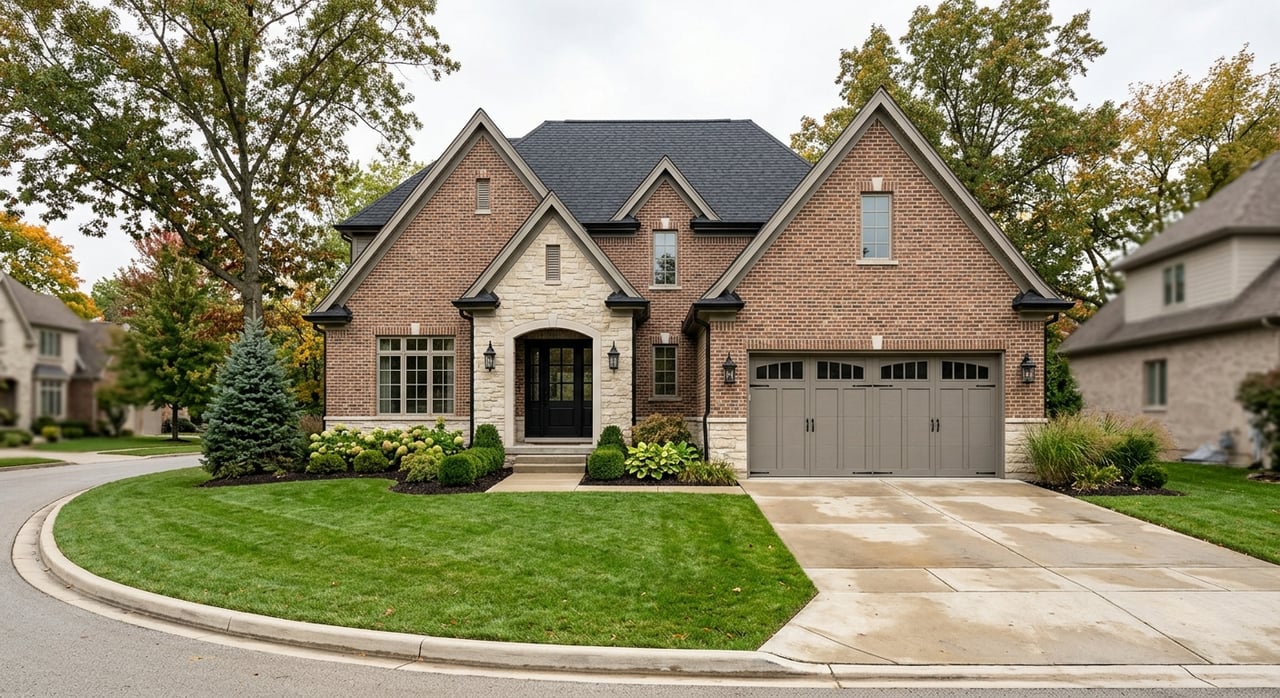
Tudor Revival Homes
Tudor Revival homes in Barrington usually date to the 1920s and 1930s. Common features include steep roofs, casement windows, arched openings, and exterior details in brick, stucco, or faux timber.
This style often feels more formal and storybook in appearance. If you like older homes with a distinctive facade, Tudor properties can be especially appealing.
Colonial Revival Homes
Colonial Revival homes, including Cape Cod and Dutch Colonial variants, also appear in Barrington. The classic markers include symmetrical facades, pedimented entries, and double-hung windows. Dutch Colonial homes often stand out with gambrel roofs.
These homes tend to feel balanced and traditional. In many cases, they appeal to buyers who want timeless architecture rather than highly decorative design.
How to Match the Right Area to You
The easiest way to think about Barrington is by asking what matters most in your daily life. If you want convenience and train access, start with the village center. If you want neighborhood structure and established surroundings, focus on the traditional subdivisions. If land and privacy matter most, look toward the larger-lot pockets.
A simple framework from the research report works well:
- Village center means convenience and character
- Established subdivisions mean traditional neighborhood living and, in some cases, amenities
- Estate-style pockets mean land and privacy
- Historic overlay areas mean architectural character with exterior review rules
Because pricing and sales activity can vary sharply by submarket, it helps to compare homes block by block and neighborhood by neighborhood. In Barrington, that level of detail matters more than broad headline averages.
If you are trying to narrow your search or figure out how your current home fits into Barrington’s market, working with a team that understands both local nuance and property-level data can make the process much clearer. To talk through your options, connect with Jeffrey Padesky Real Estate.
FAQs
What are the main neighborhood types in Barrington, IL?
- Barrington is best understood in four broad categories: the village center, historic overlay areas, established subdivisions, and larger-lot or estate-style pockets.
What is the most walkable part of Barrington, IL?
- The Village Center is the most walkable part of Barrington, with a mix of residential and commercial uses near the Metra station.
What should buyers know about Barrington’s Historic Overlay District?
- Buyers should know that exterior changes generally require village approval, and the review process usually takes about 60 to 90 days.
What home styles are common in Barrington, IL?
- Common Barrington home styles include Folk, Craftsman, Bungalow, Victorian, Queen Anne, Tudor Revival, and Colonial Revival homes.
Which Barrington neighborhoods fit buyers who want more land?
- Larger-lot areas such as Steeplechase and Tall Trees are better fits for buyers who want more privacy, more yard space, and greater separation between homes.
Are Barrington home prices all in the same range?
- No. Barrington has wide price variation by neighborhood and property type, so it is more accurate to think of it as a market of submarkets rather than one single price point.